Press "Enter" to skip to content

Posts published in January 2026

CUPE enters arbitration on flight attendant wages with Air Canada

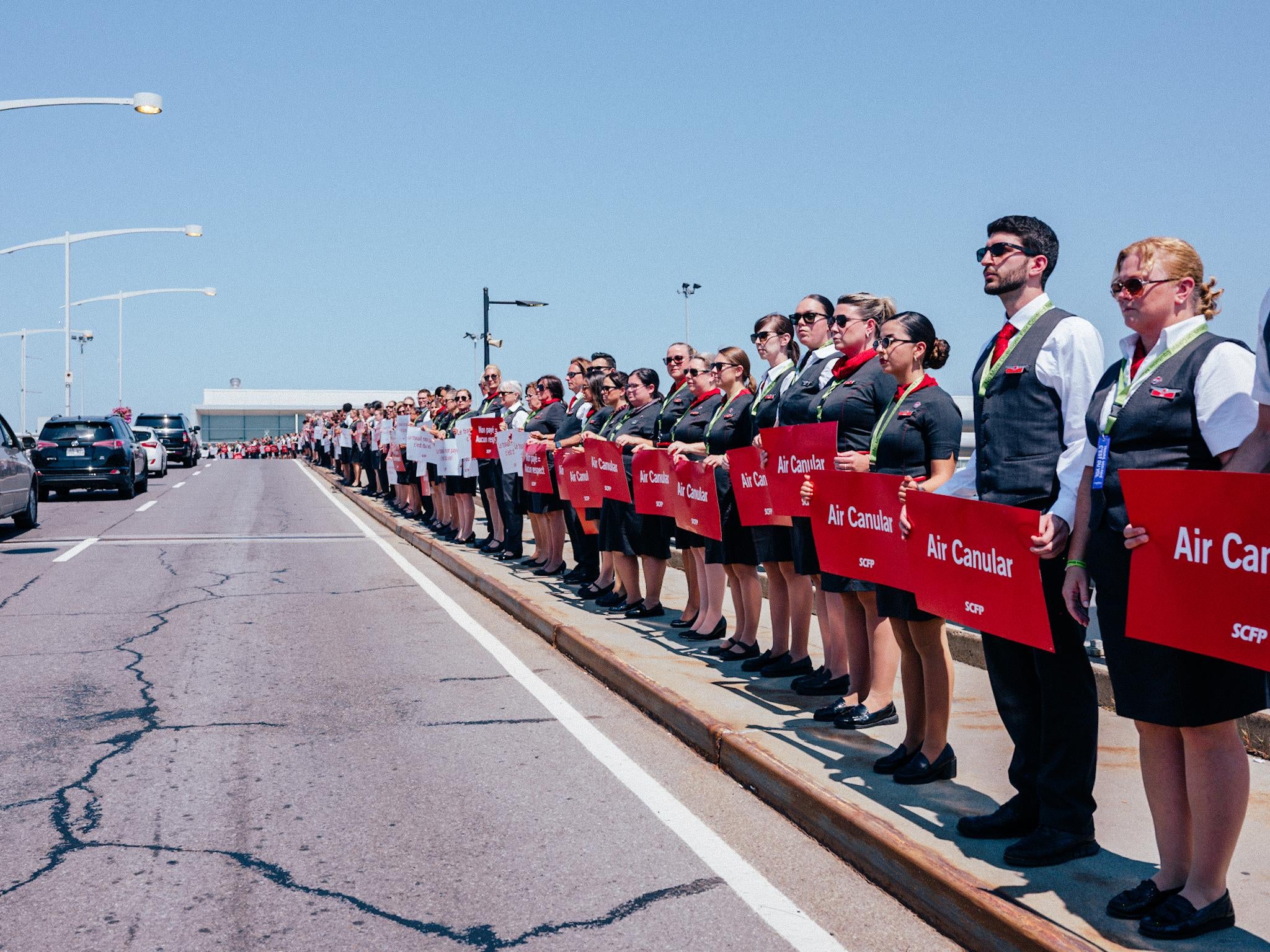
The Air Canada Component of the Canadian Union of Public Employees (CUPE) has begun its first day of arbitration with Air Canada and Arbitrator Paula Knopf to settle wages after flight attendants voted over 99% to reject Air Canada’s final wage offer in September 2025.

“These hearings will provide our members an opportunity to hear the facts around what transpired in the negotiations spanning December 2024 to August 2025, and also a sense of what to expect from the process going forward,” said Component President Wesley Lesosky.

“It will also give our members an opportunity to hear the extent to which Air Canada values our members and the vital, safety-critical work they do every day.”

In August 2025, Air Canada sought and obtained the support of the federal government to strip Air Canada flight attendants of their Charter right to strike for better working conditions. Air Canada CEO Michael Rousseau admitted on live television that Air Canada did not make contingency plans for a strike, because they anticipated federal intervention to quash any job action on its behalf.

However, flight attendants defied the federal government’s back-to-work order, prompting Air Canada back to the bargaining table where a stronger offer on ground pay was achieved, but Air Canada refused to budge on their previous positions on hourly rates of pay. The parties agreed to move the final question of wages to arbitration.

“The fact that we are here is a testament to the courage of our members,” said Lesosky. “We refused to back down when a multi-billion-dollar company and their enforcers in the federal government tried to put their boots on our necks.”

“We achieved a better deal because of the bravery of our flight attendants, and we are hopeful we will make our case before the arbitrator that our members deserve better than the poverty wages offered by our employer.”

Westjet backs off unpopular cabin changes

CUPE 8125, representing over 4,700 cabin crew members at WestJet and Encore, acknowledges WestJet’s decision to reverse the universally unpopular new 28-inch-pitch seat configuration. This pause follows significant concern from both employees and guests regarding the operational impacts and overall experience resulting from the denser cabin layout.

“Our members have been telling us very clearly that these reconfigured aircraft led to increased tensions onboard, more frequent escalated interactions with guests, and significant physical and emotional strain,” said Alia Hussain, CUPE 8125 WestJet Component President. 

The union reminds the public that Cabin Crew are not responsible for corporate decisions. During the new seat configuration rollout, frontline employees experienced a troubling rise in guest frustration. That frustration, and even aggression, was too often directed at the very people tasked with maintaining safety and care onboard. Flight attendants were often learning about or experiencing the changes at the same time guests were.

“Our members do not design aircraft or determine service models,” said Hussain. “Their role is to deliver safety, service, and professionalism in the face of ever-changing operational demands directed by the company.”

CUPE 8125 has consistently emphasized that frontline experience must inform decision-making, especially when it directly impacts the travel experience. As the union enters the next stage of bargaining, it continues to advocate for decisions that prioritize people, both employees and guests, recognizing that long-term business success is built on that foundation.

“We remain hopeful that this signals a shift toward a more collaborative dialogue going forward,” said Hussain. “When frontline realities are taken seriously, everyone benefits: the operation, the guest, and the workforce.”

“We hope that WestJet will continue in this spirit and end unpaid work for our members. Canadians across the country agree that flight attendants should be paid for all their hours on the job, and we look forward to addressing this issue at the bargaining table.”

CUPE 8125 is calling on WestJet to meaningfully engage with flight attendants and their union in the future, before making decisions that directly affect working conditions, passenger interactions, and onboard safety.

Latest response from UCP on health care crisis is a lot of nothing

CUPE Alberta which represents Alberta health care workers is slamming an announcement from the UCP government in response to the crisis in emergency rooms.

CUPE Alberta President Raj Uppal, herself a former emergency room worker at Grey Nuns Hospital in Edmonton, says that while the plans look good, no action is being taken.

“The number of new beds announced today is exactly what they announced on November 14th,” said Uppal. “You can put the two press releases side by side and not know which is which. The real question is – will they ever deliver?”

“A thousand beds promised in November, a thousand beds promised again today. Not one of them has been opened. Not one.”

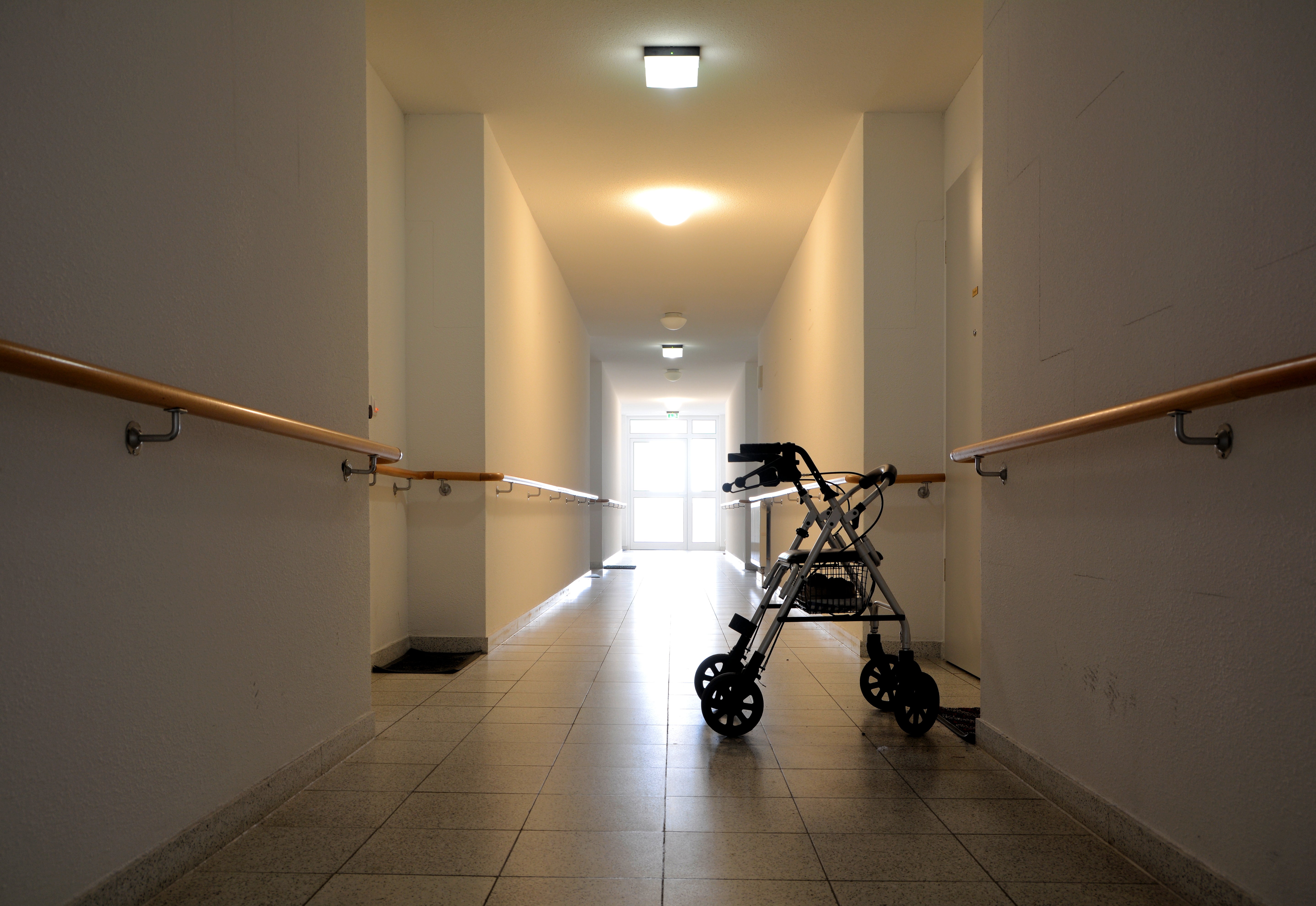
In the meantime, Alberta emergency rooms have been rocked by crises and overcrowding in recent weeks. In December, a 44-year old man died of heart failure after eight hours waiting at Edmonton’s Grey Nuns Hospital. In another case, an elderly man with the flu waited for almost four days on a stretcher in a hallway before receiving care.

Uppal said CUPE Alberta is echoing the call from the Alberta Medical Association for a declaration of a state of emergency.

“A state of emergency gives authorities more tools to deal with the overcrowding crisis,” said Uppal. “That way, they don’t have to wait for the UCP to keep their promises of more beds.”

“Listen to health care workers. There is a health care emergency in Alberta. Admit it, so we can work on it.”

Uppal scoffed at Minister Matt Jones’ promise of a judicial inquiry into the death of the patient at Grey Nuns, pointing out that the government has been ignoring the recommendations of a previous judicial inquiry into the death of a CUPE member working in social services.

“This government talks the talk, but it’s a lie. They never take any action. They just don’t care.”

Long-term care home workers votes to strike in Amherst, Nova Scotia

Workers from Northumberland Hall long-term care home, represented by CUPE 5018, voted 94% in favour of a strike mandate late last week, bringing the total number of CUPE long-term care homes voting to strike to 30.

“This is not how we wanted to start 2026,” said CUPE 5018 President Barb Jenkins. “I think we all hoped that, by now, the government would have made an offer that recognized the vital work we do and our role in the health care system more broadly, but that’s simply not the case. It’s disappointing, but, if that’s the way it’s going to be, me and my fellow workers are prepared to fight for what we deserve.”

CUPE 5018 joins the other long-term care workers in fighting for better wages and improved recruitment and retention, while also bargaining for more local specific contract changes to bring their collective agreement in line with other Shannex-operated long-term care homes in the province.

In the last quarter of 2025, CUPE represented long-term care homes began taking strike votes as bargaining with the provincial government had stalled following a subpar wage offer. These workers have banded together as a sector to fight for wage increases that recognize the increased cost-of-living, with an extra focus on classifications such as support services, that were left out of previous health care adjustments provided by the government outside bargaining.

“Everyone keeps asking me if it’s all about the money, if that’s the only thing we care about, but the reality is the government’s refusal to invest in the workers who keep long-term care running is the reason the sector is struggling,” explained CUPE Long Term Care Coordinator Tammy Martin. “Adding beds and building new homes won’t help if there is no one left to provide care. Offering Continuing Care Assistants (CCAs) free tuition won’t help if they use that certification to work in any of the other sectors or provinces that pay better. The solution is simple: pay the workers what they’re worth. Start there.”

CUPE long-term care and the government will return to the table at the end of January for conciliation.

New collective agreement for Hydro-Québec specialists and professionals will protect in-house expertise

The 5,500 members of the Syndicat des spécialistes et professionnels d’Hydro-Québec (SSPHQ-CUPE 4250) have a new collective agreement. At a general meeting, 87% voted to ratify the tentative agreement, reached on December 19, that covers the period from January 2025 to December 2029.

“This negotiation was a paradigm shift for us,” explained Gilles Cazade, president of SSPHQ-CUPE 4250. “Despite the difficult political context and turnover at the helm of this Crown corporation, we used innovative pressure tactics, reframed labour relations and took great strides in member mobilization. We also obtained provisions that will enable us to better control contracting out and protect Hydro-Québec’s in-house expertise. Our members were motivated, they showed up and they made the difference. This puts us in a good position for the next negotiations.”

Negotiated gains include a compounded wage increase of at least 18.4% for 2024–2029, and the introduction of new promotion lines for specialists. Further, a clause provides employees with flexibility in choosing most of their work-from-home days, and a 12-month pilot project will explore increased use of satellite offices and maximized occupation of Hydro-Québec premises.